 CASCINA
The most useful rule is simple: a delicate dish requires an oil that accompanies; a toasted, savory or structured dish can support a more intense extra virgin olive oil.
Start from the dish, not from the name of the bottle
Evaluate sweetness, fatness, toasting, spices and persistence. On white fish, tender salads and white meats, a delicate Leccino leaves the ingredients legible. On legumes, roasts, rustic bruschetta and mature cheeses, an intense Coratina remains present.
Quantity is part of the pairing: the same strong oil can become an accent if used in drops or the protagonist if poured generously.
A quick map of pairings
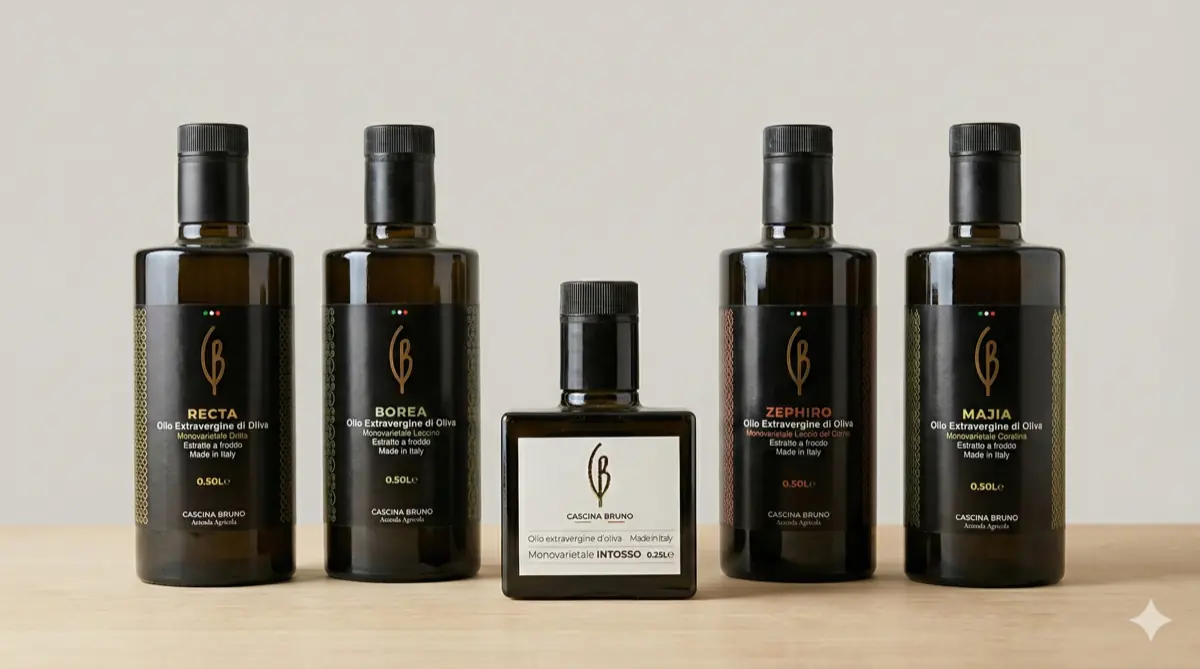
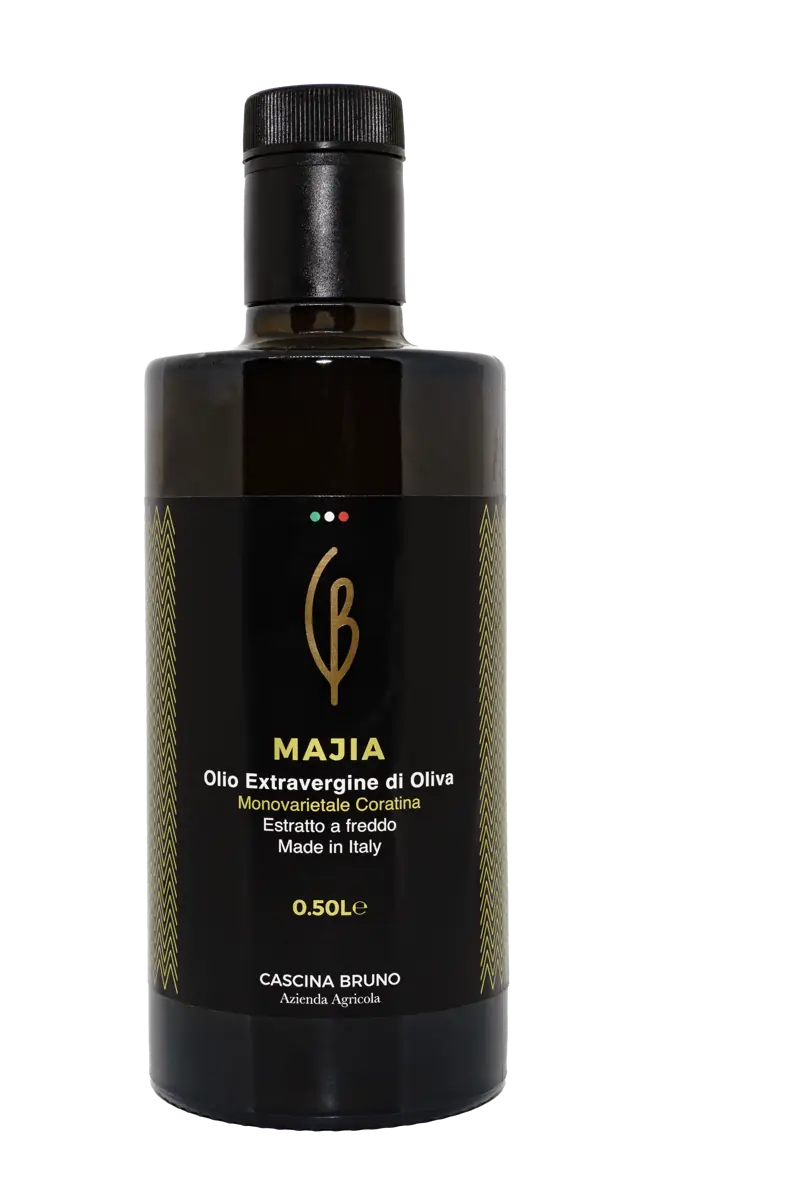
Borea 100% Leccino works well on fish, sweet vegetables, light soups and chicken. Recta 100% Dritta accompanies legumes, tomatoes and everyday cooking. Zephiro, from Leccio del Corno, supports grilled vegetables and tasty first courses. Majia 100% Coratina combines chickpeas, red meat, hot bread and pecorino cheese well.
These are starting points, not rigid rules: the year and the recipe can shift the balance.
Raw or cooked?
You perceive better raw food? varietal aromas and you can dose the oil at the last moment. During cooking, the extra virgin olive oil contributes to the aromatic structure, but the finer notes become less evident.
A practical solution is to use oil in the preparation and add a few drops of the same monovarietal at the end of cooking to regain its character.
Do a comparative test
Divide the same food into two portions and use the same quantity of two oils. Elice bread, boiled potato, chickpea cream or tomato are simple bases. Taste alternating and ask yourself which oil completes the dish without canceling it.
It's the same principle we use during tastings in the company: direct comparison, same base, attention to the differences.
Frequently asked questions
Which oil to use on fish?
Start with a delicate fruity one like Leccino; on fatty fish or robust recipes you can try a more intense oil.
Which oil to choose for legumes?
A medium or intense oil works well: bitter and spicy give boost to the sweetness of chickpeas, beans and lentils.
Does intense oil always cover the dish?
No, if dosed carefully. A few drops can give depth without dominating.
Can I use the same oil for everything?
Yes, but comparing two profiles helps to obtain more precise combinations and to understand one's tastes.
Sources and method: this guide combines the production experience documented on the Cascina Bruno website with European Commission: categories and characteristics of olive oil. Text published on 23 July 2026; last revised August 25, 2026.