 CASCINA
To choose well, it is not enough to look for a dark bottle or a declared low acidity. We need a legible label, a traceable producer and, when possible, a tasting that shows fruitiness and absence of defects.
What does “extra virgin” really mean
Extra virgin oil belongs to the highest quality category among virgin olive oils: it is obtained directly from the olives with mechanical processes, it must be fruity and has no sensory defects. The free acidity limit is 0.8%, but acidity alone does not indicate aromas, cleanliness and freshness.
At home you cannot measure acidity by tasting: bitter and spicy are not "acidity". They are natural sensations that can be more or less evident depending on the cultivar, maturation and vintage.
Five checks on the label
Search for the complete category, the origin, the minimum shelf life, the person responsible for the product and a traceable batch. The harvest year is useful information when present, but must refer entirely to that campaign.
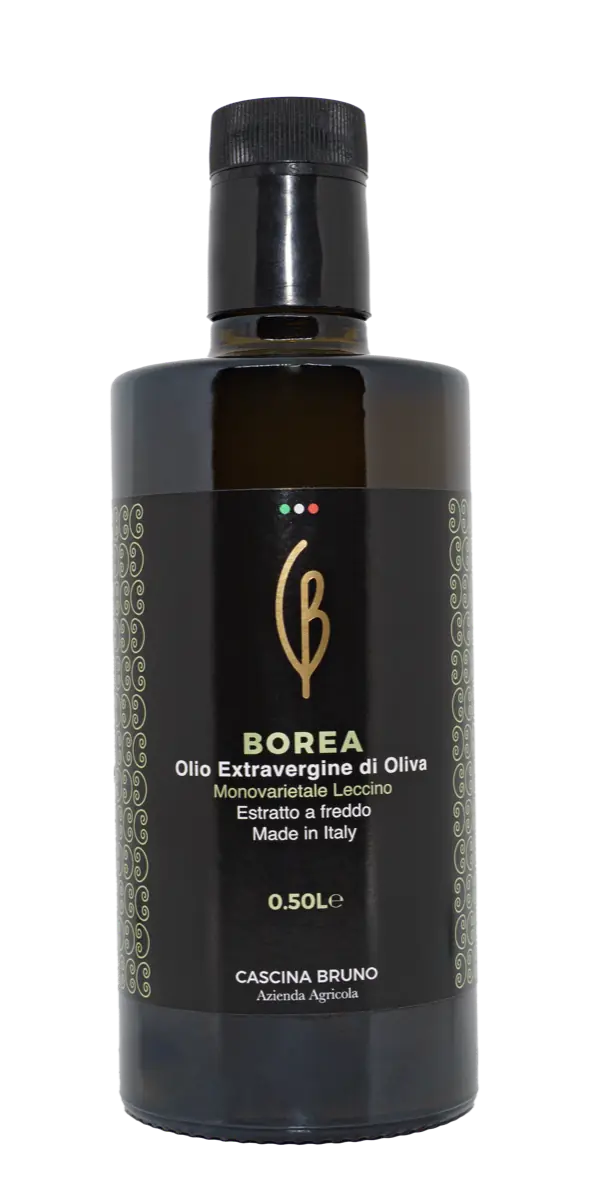
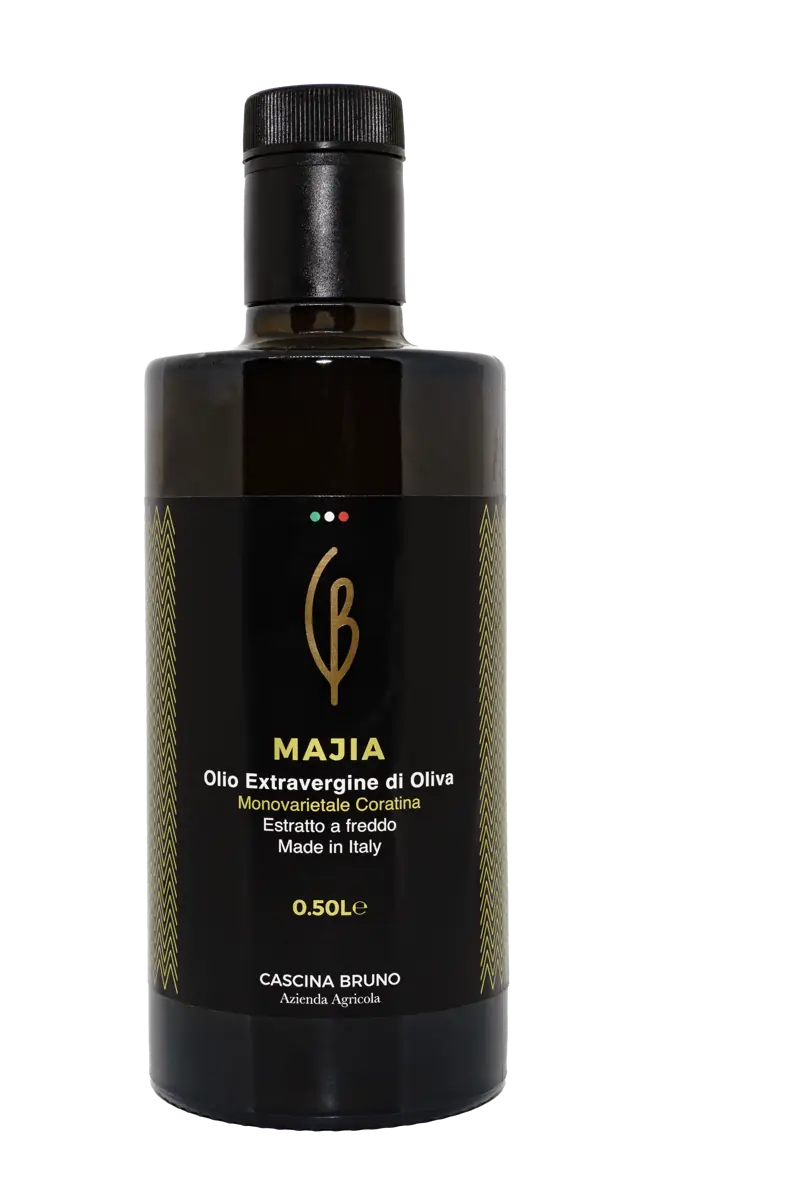
Be wary of vague descriptions that don't allow you to understand who produced the oil. A declared cultivar, such as Leccino or Coratina, helps to predict the character, without replacing the tasting.
- Category "extra virgin olive oil" written in full
- Clearly identifiable origin and producer
- Format suitable for actual consumption of the family
- Dark glass or can that protects from light
- Coherent and non-miraculous sensorial indications
The simplest tasting
Pour a little oil into a glass, warm it in your hands and smell. Look for clean plant memories: grass, artichoke, tomato, almond or apple. Then take a small sip and let the bitterness and spiciness emerge.
Rancid, musty, winey or hints of fermentation are different signals from the strong character of a good oil. To choose between two bottles, try them on the same slice of bread or on the same food.
Buy as much as you can protect
Light, heat and oxygen accelerate decay. Keep the package closed, away from the stove and do not pour repeatedly into transparent decorative bottles.
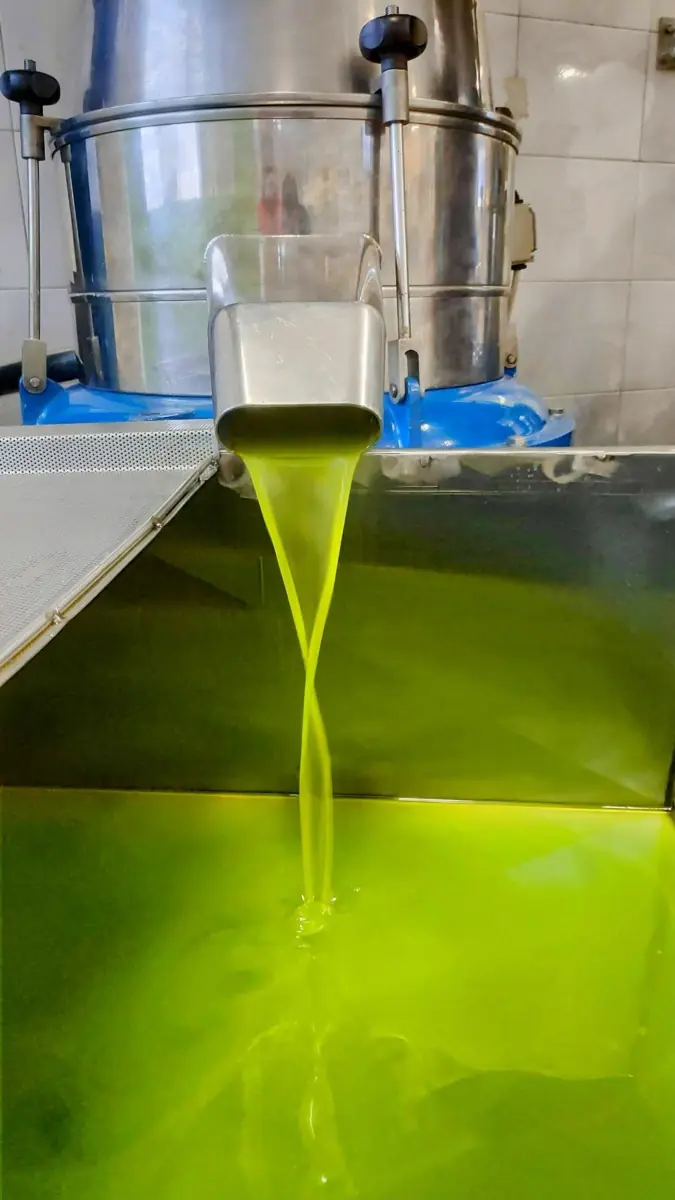
At Cascina Bruno we filter the oil and store it in stainless steel under nitrogen before packaging. It is an invisible but decisive job to bring a clean profile to the bottle.
Frequently asked questions
Is a greener oil always better?
No. The color depends on pigments, cultivar and ripeness and is not enough to classify the quality.
Does spiciness indicate acidity?
No. Spicy is a tactile sensation; free acidity is a chemical parameter measured in the laboratory.
Better filtered or unfiltered?
It depends on management. We filter to eliminate residues which, over time, can favor alterations.
How much oil should you buy?
A quantity that can be consumed keeping the package tightly closed and protected from light and heat.
Sources and method: this guide combines the production experience documented on the Cascina Bruno website with European Commission: categories and characteristics of olive oil and Delegated Regulation (EU) 2022/2104 on oil labelling. Text published on 22 January 2026; last revised 25 August 2026.