 CASCINA
If you love rustic bruschetta, legumes, red meats and mature cheeses, the Coratina is often the most expressive choice. If you are looking for balance on fish, vegetables, white meats or salads, Leccino is easier to dose.
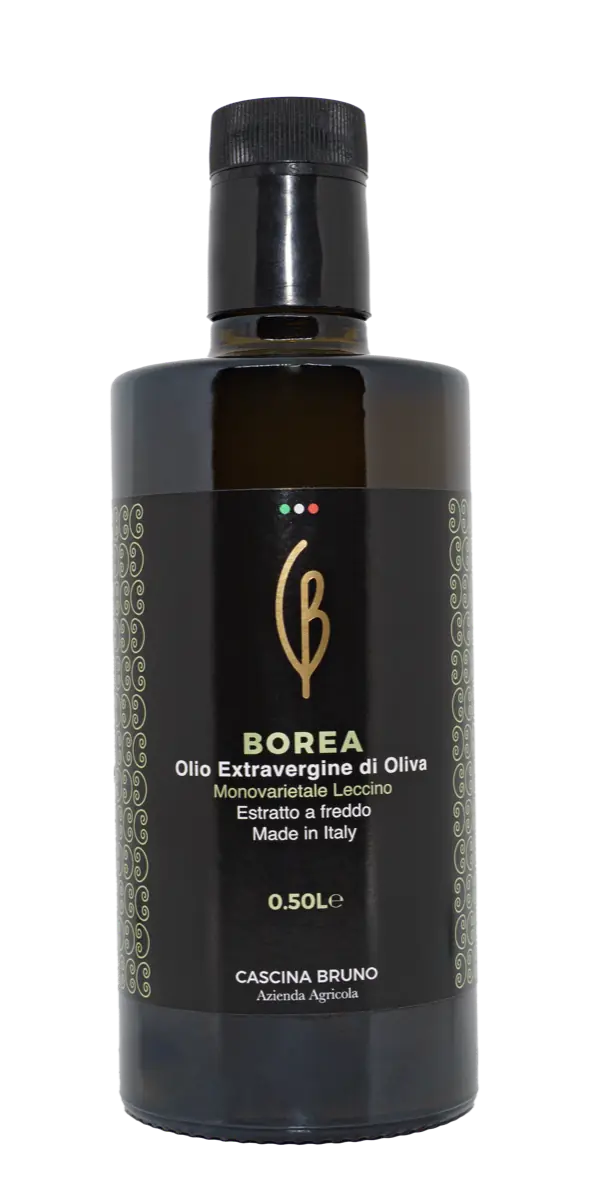
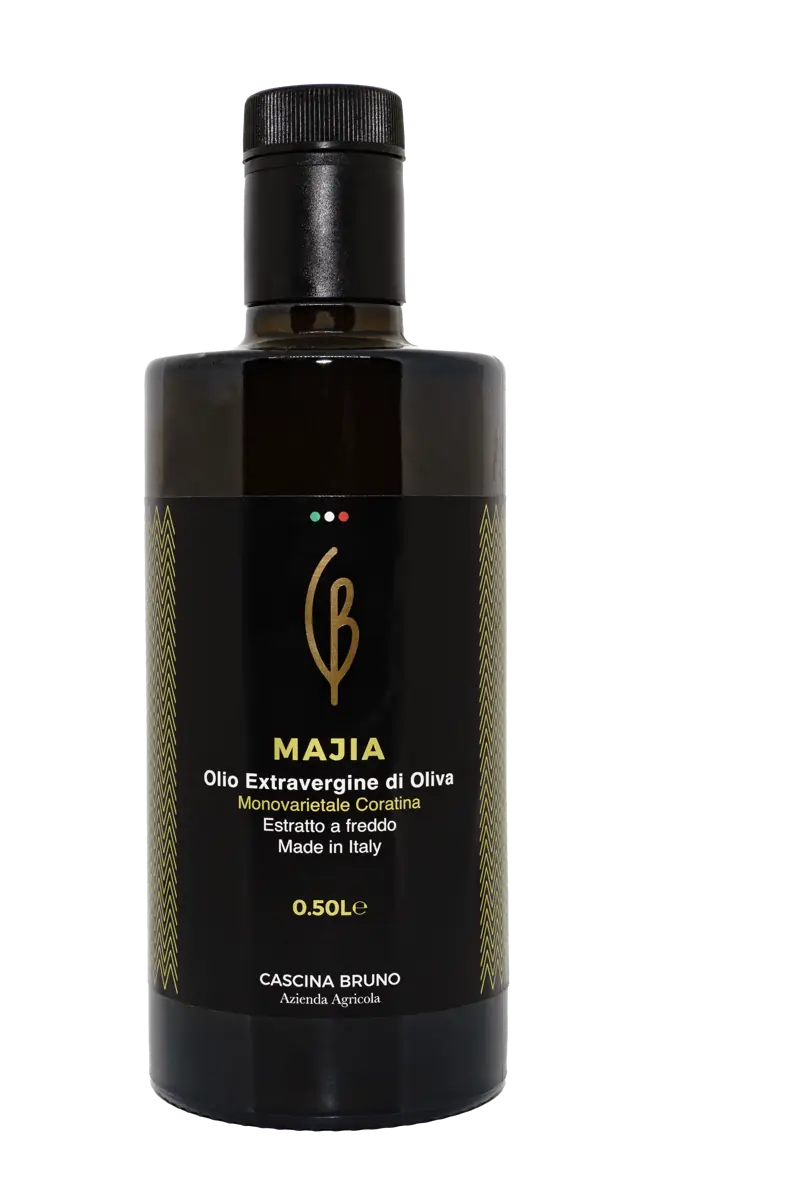
That's the short answer. The useful one requires tasting and understanding why the two oils behave differently. At Cascina Bruno we grow both cultivars in Elice, in the Pescara hinterland, and keep them separated into the monovarietals Majia, 100% Coratina, and Borea, 100% Leccino. The comparison below arises from the sensorial profiles of our productions: the year, the harvest time and the work in the oil mill can change intensity and nuances.
| Characteristics | Coratina | Leccino |
|---|---|---|
| Impact at first tasting | Intense and vigorous | Soft and round |
| Recurring aromas in our oils | Raw artichoke, bitter almond, rocket, green tomato | Fresh olive, cut grass, artichoke, green apple |
| Bitter and spicy | Pronounced, with progressive spiciness | Light and balanced |
| Ideal dishes | Rustic bruschetta, legumes, red meats, seasoned pecorino | Delicate salads, fish, white meats, light soups |
| For those suitable | For those who want to clearly taste the oil on the plate | For those seeking harmony and versatility |
Before choosing: taste them yourself
Bread helps you imagine the combination, but absorbs and attenuates some sensations. To really compare two oils, use a small glass, warm it in your hands for a few seconds and proceed in three steps:
- Smell. Look for recognizable vegetal references: grass, artichoke, tomato, almond.
- Take a small sip. Distribute it in your mouth without hurry.
- Suck little air between your teeth. Bitter and spicy become more legible and you can evaluate their balance.
The spiciness in the throat of the Coratina is not, in itself, a flaw. It's part of his character. The right question is whether that strength is clean, harmonious and suitable for what you are cooking.
When to choose a Leccino
Our Borea 100% Leccino has a delicate fruitiness and a soft entry. It is the most immediate choice when the oil must accompany without taking center stage.
- Steamed or baked fish: add it raw, starting with little.
- Salads and sweet vegetables: supports the ingredients without making them bitter.
- Meat white: completes the dish while keeping the preparation legible.
- Light soups and delicate legumes: gives aroma without weighing it down.
It is also a good starting point for those approaching single-varietal oils: the notes of fresh olive, green apple and cut grass are present, but not aggressive.
When to choose a Coratina
Our Majia 100% Coratina has a stronger fruitiness, pronounced bitterness and a spiciness that grows in the finish. It works when the dish has enough structure to communicate with the oil.
- Rustic bruschetta: hot bread creates immediate aromas and spiciness.
- Legume soups: chickpeas, lentils and beans welcome a strong oil.
- Red meats and roasts: the intensity does not disappear alongside the toasted notes.
- Mature pecorino: bitter and spicy meet flavor and persistence.
On a delicate dish the Coratina is not forbidden: it simply needs to be measured out. A few drops can become an accent; an abundant quantity can instead cover the other ingredients.
A simple rule for deciding
Start from the intensity of the dish, not from the perceived prestige of the bottle:
- delicate preparation + sweet or less aromatic ingredients → Leccino;
- tasty preparation + toasting, maturing or legumes → Coratina;
- if oil is the protagonist, as on bruschetta → choose based on personal taste and compare them.
However, there is no algorithm for the palate. The most useful test is to pour the same quantity of the two oils on two portions of the same food. It is the quickest way to understand which balance you prefer.
And the DOP Aprutino Pescarese?
“Monovarietale” and “DOP” describe different aspects. Monovarietal indicates that the oil comes from a single cultivar. The DOP Aprutino Pescarese instead identifies a product linked to a territory and to a precise specification.
The specification states that Dritta, Leccino and Toccolana, alone or together, represent at least 80% of the olives; other varieties can contribute up to 20%. It includes the territory of the province of Pescara, including Elice, and establishes requirements for production, processing and packaging. For this reason, it is not enough to read “Leccino” or “Coratina” to conclude that an oil is DOP: you need to check the label and certification.
If you are specifically looking for this denomination, you can consult our EVO Oil DOP Aprutino Pescarese.
Frequently asked questions
Is Coratina or Leccino oil more delicate?
Generally Leccino offers a softer and more delicate profile; Coratina is more intense, bitter and spicy. However, harvest, year and processing can change the final result.
Which oil to choose for fish?
On steamed, baked fish and delicate preparations, it is normally easier to use a Leccino. A Coratina can work on fatty fish or robust recipes, in controlled quantities.
Is the spiciness of the Coratina a flaw?
No. In a fresh and correctly produced oil, bitterness and spiciness are natural sensory characteristics. Notes such as rancid, moldy or winey instead indicate problems.
Coratina and Leccino can be DOP Aprutino Pescarese?
The specification DOP Aprutino Pescarese requires Dritta, Leccino and Toccolana for at least 80%; other varieties can contribute up to 20%. The cultivar alone is not enough: all the requirements of the specification must be respected.
How this guide was prepared: sensory profiles, harvesting and processing derive from the data sheets and production experience documented by Cascina Bruno. The DOP requirements were verified on the disciplinary published by the Ministry of Agriculture. Text revised on 20 August 2026.